How Hard Water Is Destroying Your Towels (And What to Do About It)
The invisible mineral buildup making your towels stiff, rough, and less absorbent—and the proven solutions.
In This Article
If your towels have become stiff, scratchy, and less absorbent despite regular washing, hard water is likely the culprit. Approximately 85% of American households have hard water, and its effects on bathroom textiles are significant—but fixable.
What Is Hard Water?
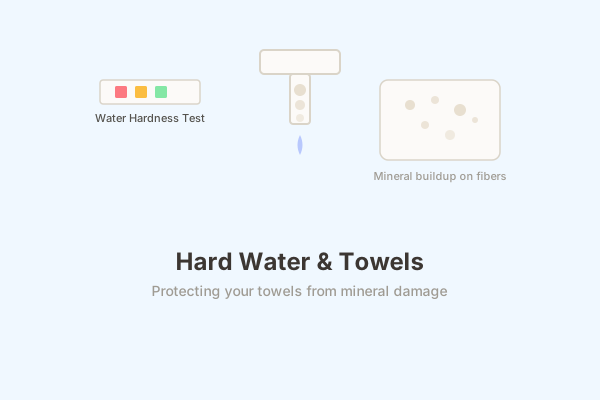
Hard water contains high concentrations of dissolved minerals—primarily calcium and magnesium. When you wash towels in hard water, these minerals precipitate onto the cotton fibers and accumulate over time. After just 20 washes in hard water, towel fibers can become coated with a thin layer of mineral deposit that feels like sandpaper.
How Mineral Buildup Damages Towels
- Reduced Absorbency: Mineral deposits fill the microscopic gaps between cotton fibers, blocking the capillary action that makes towels absorbent.
- Stiffness: Calcium carbonate deposits literally cement the loops together, turning a plush towel into a stiff board.
- Fiber Breakdown: Magnesium ions react with detergent to form insoluble salts that weaken cellulose chains, reducing the towel's tensile strength and lifespan by up to 40%.
- Discoloration: Iron in hard water oxidizes on fabric, causing yellowing and brown spots that no bleach can fully remove.
How to Test Your Water Hardness
Buy an inexpensive water hardness test strip ($10–15 online). Fill a clean bottle with tap water, add the test strip, and compare the color to the chart. Water above 7 grains per gallon (gpg) or 120 ppm is considered hard.
Solution 1: Install a Water Softener
A whole-house water softener replaces calcium and magnesium ions with sodium ions, eliminating mineral buildup at the source. This is the most effective long-term solution and will also benefit your skin, hair, dishes, and appliances.
Solution 2: Use White Vinegar in the Rinse Cycle
If a water softener is not feasible, add ½ cup of white vinegar to the rinse cycle. The acetic acid dissolves mineral deposits on the fibers, restoring softness and absorbency. This is a temporary fix that needs to be repeated with every wash, but it is remarkably effective.
Solution 3: Wash with Less Detergent
Hard water requires more detergent to create suds, but excess detergent combined with minerals creates an even worse buildup called "soap scum." Use half the recommended amount and add washing soda (sodium carbonate) to the wash cycle to soften the water chemically.
What NOT to Do
Do not use fabric softeners. They add a silicone coating on top of the already mineral-clogged fibers, making the problem worse. Your towels will feel temporarily softer but will become progressively less absorbent.